Press Record
February 2025. The Grammy Awards. The nominees for Best Rock Performance are read out, the envelope opens, and the winner is...
The Beatles.
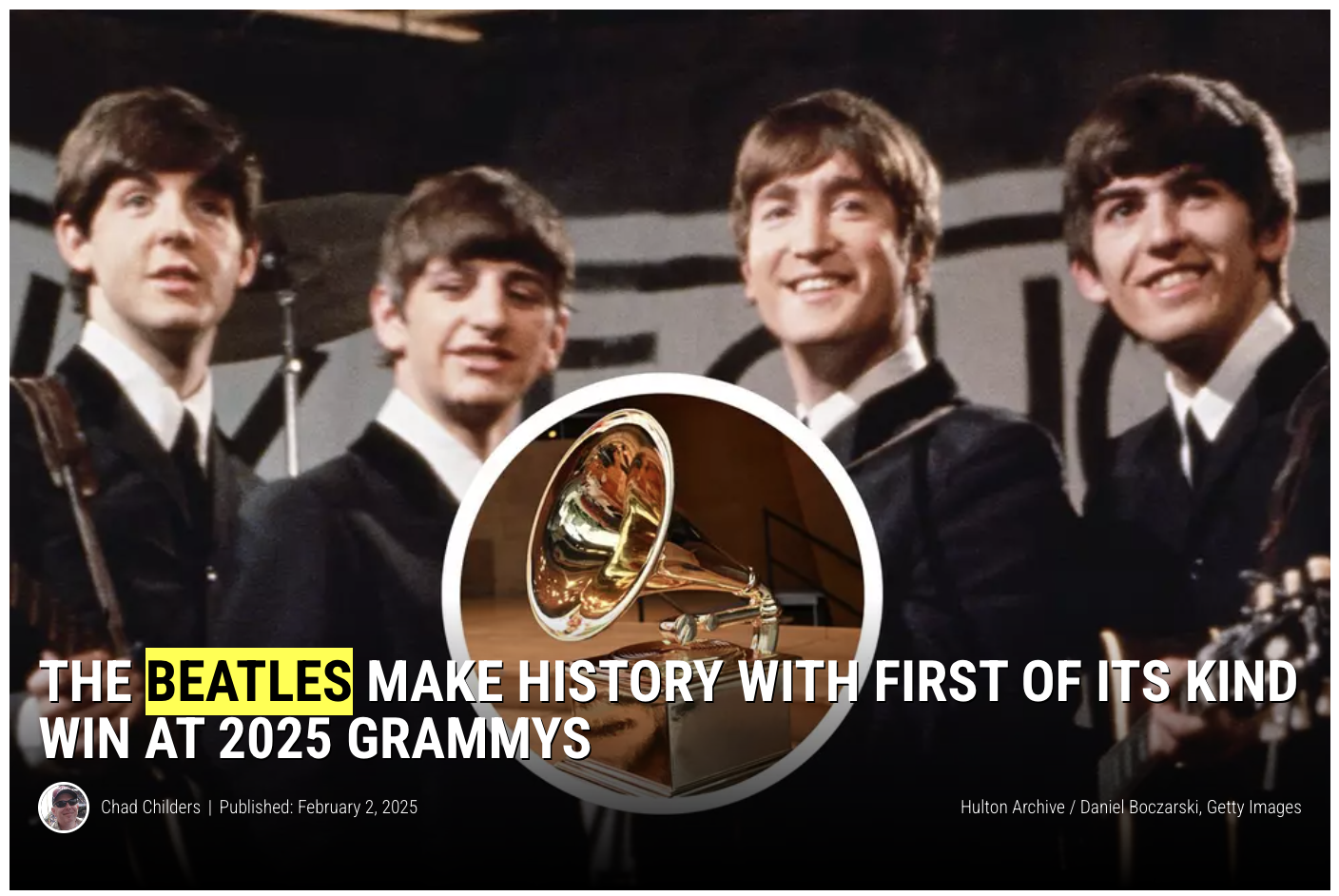
John Lennon had been dead for 44 years. The band had broken up nearly 55 years earlier.
And the Beatles won a Grammy for a new song.
The award came in 2025, but the song had been recorded almost fifty years before. One night in 1977, Lennon sat at the piano at home and sang a demo into a cassette recorder. The piano buried his voice. Years later the surviving members tried to finish it, and they gave up. The tape was set aside.
Half a century on, AI pulled Lennon's voice cleanly off that tape. Paul and Ringo finished the song. It was called "Now and Then," and it became the first song made with the help of AI to win a Grammy.
Paul McCartney was careful about how he put it. "Nothing has been artificially or synthetically created," he said. "It's all real."
He's right. And that is the whole point of this story.
AI didn't bring Lennon back. It brought back the past Lennon left behind.
If he hadn't pressed record that night in 1977, the song would not exist. Bring in the best AI in the world and it still can't pull out a record that was never made.
People who leave a record live on, into the present and into the future.
This goes well beyond the Beatles. Every day, each of us is handing a demo tape to AI. Before I explain, try one experiment.
Ask the machine who you are
Open ChatGPT right now. (A temporary chat or a logged-out window works best, so it can't peek at your own history.) Type your name and ask:
"Who is [your name]?"
Odds are you'll get one of two answers.
"I couldn't find any information about this person."
"Did you mean the actor with the same name?"
Now try the name of a celebrity or a well-known CEO. The model will go on for paragraphs. Their companies, their philosophy, their best lines. It digs through Wikipedia and everything else it has read online, organizes it, and hands it back to you.
The gap between you and them has nothing to do with ability. It comes down to whether your story, your past, lives somewhere AI can read.
That is the hard truth of the AI era. A past that AI doesn't know about might as well not exist.
You have a diploma in a drawer somewhere. An award in a frame. A certificate in a folder. All of that is your story, and all of it was made to be shown to people.
Here's the problem. Someone else is doing the judging now.
The judge is no longer human
Last episode, So, Have a Good Past, I argued that the AI era is the era where your past does the judging. This episode asks the next question. Who reads that past?
Start with the numbers.
In a Resume Builder survey of nearly a thousand business leaders, 83% of companies said they would use AI to screen résumés. The first reader of your résumé is, more and more often, not a person.
Industry surveys also find that more than half of consumers now ask AI for recommendations instead of typing into a search bar. For restaurants, for doctors, for lawyers. And soon, for the people we choose to work with.
"What's that person like?" is turning into "I asked AI." The reference check is moving from humans to machines.
This is where the old kind of past shows its fatal weakness.
Your diploma is in a drawer. Your employment record sits on a company's HR server. Your license lives in a professional association's database. Every one of them is locked in a vault that only opens when a human asks.
Titles still matter. But a title AI can't see has stopped counting.
A paper past is visible only to people. In the AI era, your past has to live where AI can reach it.
Companies saw it first
As usual, businesses noticed first.
For twenty years, companies fought to land on the first page of Google. That fight became an industry called SEO. Now a new one is forming: GEO, Generative Engine Optimization. It exists to manage one thing, which is how ChatGPT, Gemini, and Perplexity describe you.
Brands subscribe to tools that ask AI the same questions every day. "What's the best company in this category?" They track whether their name shows up in the answer, how it's described, and which documents get cited. If they're missing, they publish content written for AI to read and fill the gap. Venture money is pouring into the category.
The battle for page one of Google is giving way to a battle for one sentence from AI.
That's how companies are moving. What about individuals? Same principle.
Put your name on it, put it where AI reads, and keep stacking the record.
Public writing. Work with your name attached. Footprints that turn up in search. A history of publishing. In Be a Messenger, I said that trust and responsibility attach to a name. Now add one line to that: AI has to be able to introduce that name.
Trust scales only when a stranger asks AI about you and AI can vouch for you.
So leave your digital footprint where AI can read it. In the AI era, that is what a meaningful past looks like. That is your story.
The past you hand down to your AI
Go back to the cassette.
Lennon wasn't predicting the AI era. He left a record by chance, and AI brought it back to life. For the length of one song, AI gave us his soul back.
We don't have to leave it to chance. We already live in the AI era, and the answer is in front of us. Leave your present, which is tomorrow's past, to AI. Make sure it can't miss you.
Look at the AI you use every day. Every conversation, every bit of context you explain, every record you pile up teaches it a little more about you, until it starts to work the way you do. When we say we're "training" our AI, what we're really doing is giving it a past.
That's why two people can use the exact same model and get completely different results. An AI with no history belongs to no one. An AI that has absorbed your past is the only one like it in the world.
Silicon Valley is already running the experiment. Reid Hoffman, the co-founder of LinkedIn, fed twenty years of his books, speeches, and interviews into a digital twin called Reid AI. Then he sat down across from it and interviewed himself. Twenty years of records made that possible.
The line is changing. It used to be "AI can't replace me." Now it's "I'm going to build my own AI."
What AI can never catch up on is the trust, responsibility, and experience a person piles up over a life. We just call it the past. Or our story.
And that past is no longer an asset you keep to yourself and grow old with. You pass it down to your AI.
The past is inherited.
The day an AI that has learned your ways starts working on your behalf is the day it starts giving you time back instead of taking your job.
Take the work only you can do, and turn it into work only your AI can do. That is the past worth building now. And it only happens if you keep teaching your own AI, again and again.
Leave a story AI can find
The past we grew up with lived in drawers. Diplomas, licenses, employment letters. A past for people to look at.
The past of the AI era lives in two places. In AI's memory, and inside your own AI.
The first is the public record that lets the world's AI introduce you. The second is the story you hand down to the AI that works for you.
Trust and responsibility now pass through AI. Make it possible for AI to vouch for you.
Lennon could not have known that a cassette from one night would win a Grammy nearly fifty years later. His son Sean walked up to accept it.
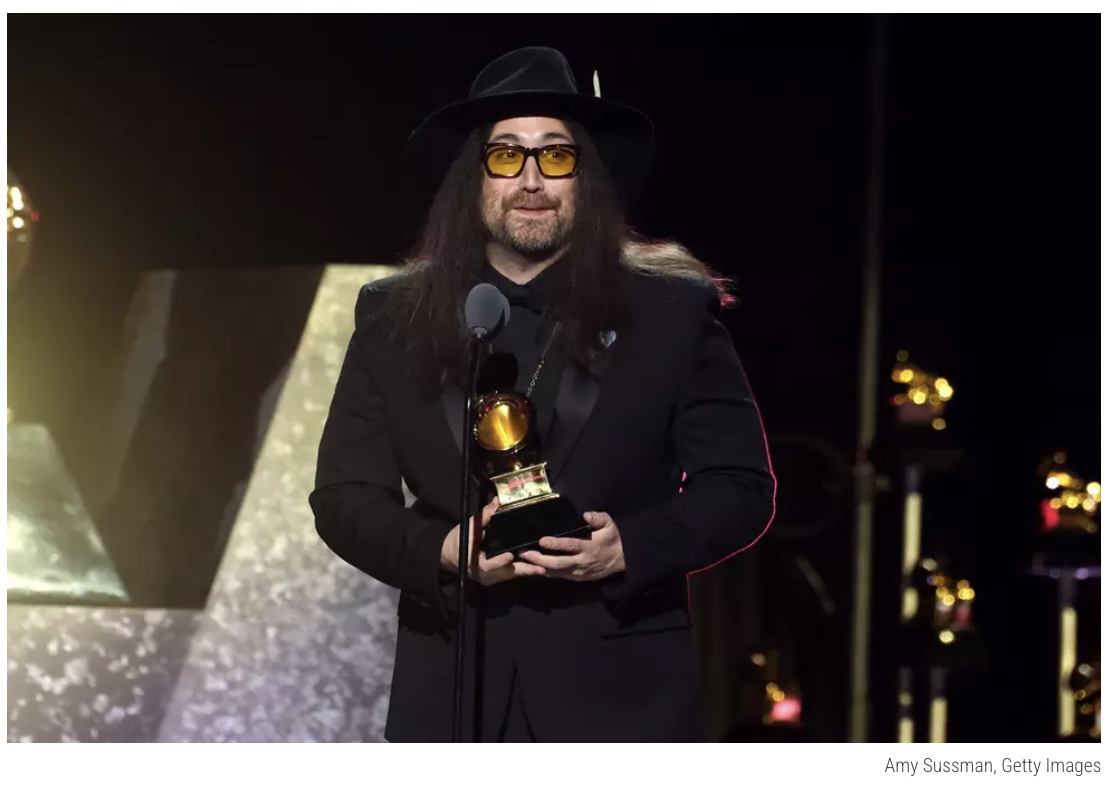
We don't know either. We can't know when, or in what form, the record we leave today will sing again.
So press record.
The past we knew lived in a drawer. It still hangs in a frame.
The past of the AI era lives in AI's memory.
If you want to win in the AI era, build a past AI can know.
- JKIMMORGAN, ai storian