Own the Road
Slack arrived, and Silicon Valley fell in love.
For a while, just knowing Slack, and using it, was proof that you were good at your job.
On November 2, 2016, Microsoft announced its answer. Teams.
That same day, Slack took out a full-page ad in The New York Times.
"Dear Microsoft, Wow. Big news! Congratulations on today's announcements. We're genuinely excited to have some competition."
It was a relaxed, confident letter. Slack was sure it had the better product.
It probably did.
Ten years have passed.
Teams has more than 300 million users, by Microsoft's own count. Slack was sold to Salesforce in 2020. It isn't even an independent company anymore.
Slack may have won on product. But products don't win wars.
Microsoft bundled Teams into Office and handed it out. Slack had to talk every team into downloading it.
Teams was already installed.
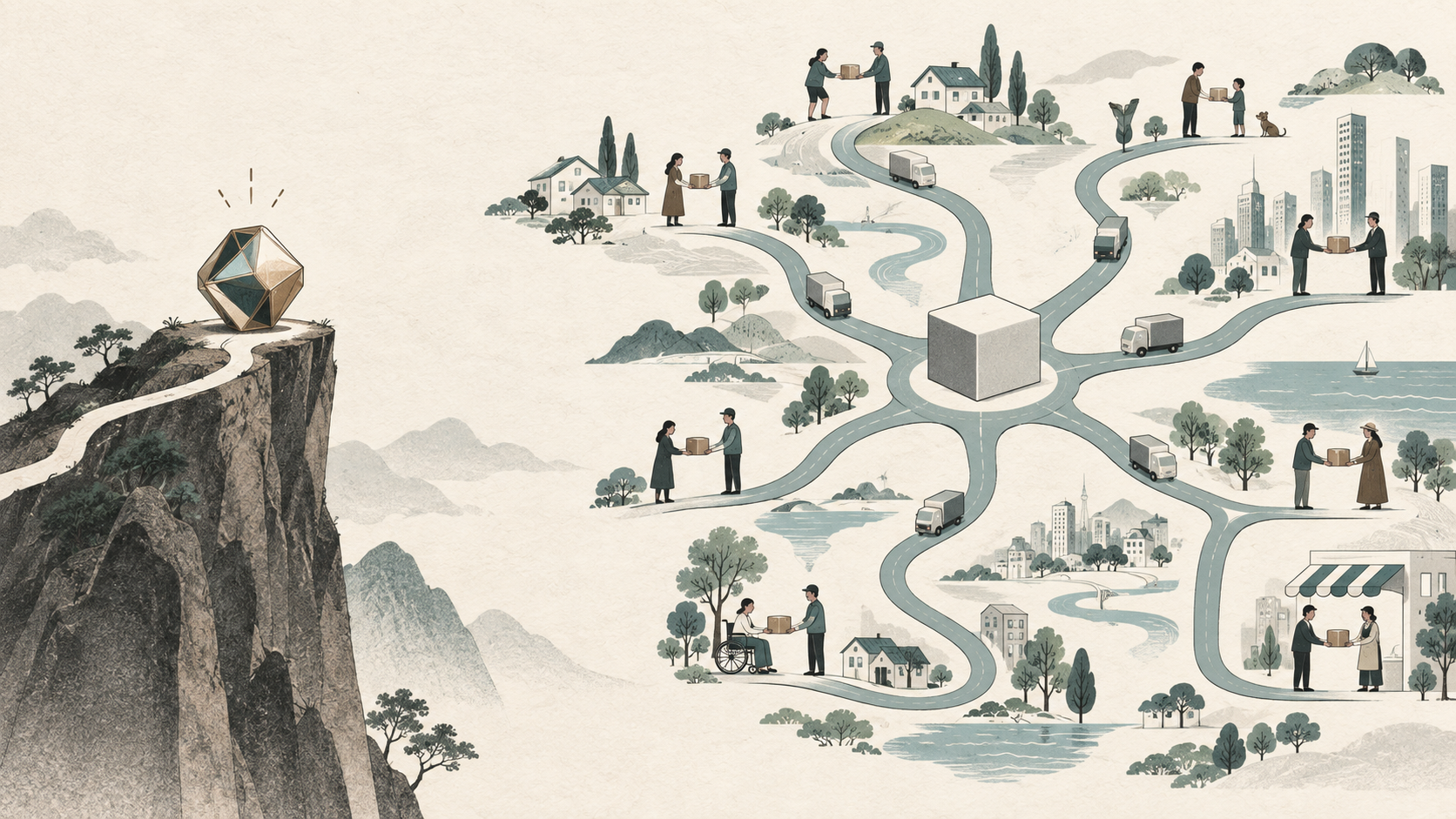
This one is uncomfortable.
It's about the rich getting richer and the poor getting poorer in the AI era, and about a game built so the platform wins.
Everything Is Getting Cheaper. Including the Ability to Build.
All through this series, I've said the same thing. Intelligence is on its way to free.
Now let's make the list longer.
Intelligence is getting cheap. Ask any question, click once, and the answer is there.
Information is getting cheap. Access is close to free.
And now the ability to make things is getting cheap too.
There's a new phrase for it. "Vibe coding." You don't need to know how to code. You tell AI what you want in plain words, and it builds the app.
The man who coined it is Andrej Karpathy, a founding member of OpenAI and the former head of AI at Tesla.
Someone who stood at the very front of coding announced that coding is now done by talking.
Anyone can build something amazing. If you have the idea, the wall between the idea and the finished thing comes down.
So far, it's a beautiful story. But the coin has another side.
If I can build it easily, you can copy it easily.
The solution used to be the value. Code, engineering talent, the ability to actually build the thing. That was the moat.
Now the water is draining out of that moat. The easier it gets to make things, the less any one thing is worth.
So what's left?
When the ability to make things becomes common, the ability to carry them becomes rare.
Distribution.
History Already Gave Us the Answer
The evidence was piling up before the AI era even started.
Disappearing messages. Posts that vanish after 24 hours. Snapchat invented that format, in 2013.
In August 2016, Instagram copied it whole. It didn't even change the name. It called them Stories too.
Instagram wasn't embarrassed. If anything, it was proud. Kevin Systrom, Instagram's CEO, admitted as much to reporters. Of Snapchat, he said:
"They deserve all the credit. This isn't about who invented something. This is about a format, and how you take it to a network."
That is the most honest confession of this era, and it came from the one who did the copying.
Not invention. Network.
So how did it turn out?
Snapchat took four years to get 100 million people using Stories.
Instagram took two months.
At the time, Instagram had 300 million daily users. Instagram could copy the feature. Snapchat could not copy a distribution network of 300 million people.
Today Stories is part of Instagram for good, and nobody asks who had it first.
Features get copied. Distribution doesn't.
Slack and Teams, Snapchat and Instagram. Two examples of the same sentence.
AI Speeds Up the Game, and It Isn't Kind
You might be thinking, "Sure, but that's Big Tech." Then look at one number.
43 days.
In October 2022, a startup called Jasper raised $125 million at a $1.5 billion valuation. It used AI to write marketing copy, and at the time it was the hottest AI startup around.
Exactly 43 days later, OpenAI released ChatGPT for free.
Much of what Jasper charged money for, ChatGPT did for nothing. Industry reports say Jasper's revenue was cut in half after that, and the company went through four rounds of layoffs. Unicorn to cautionary tale took less than a year.
That is the new speed.
Big companies used to take years to copy a startup's feature. In the meantime, the startup had time to run.
Now AI is speeding up development, and that window is shrinking to months, even weeks.
Silicon Valley has already turned it into a spectator sport. Every time OpenAI announces a new feature, people count which startups just died.
Look at how the machine works. It's brutal.
The startup tests the idea. It takes the market's reaction full in the face. The moment the idea proves real, the platform moves in. It builds the same feature, faster, and puts it in front of hundreds of millions of people.
The startup does the platform's market research.
The platform cashes the check.
The cheaper intelligence gets, and the more common features become, the more the one who owns distribution takes everything. Platforms keep gaining the upper hand. Honestly, they are turning into bullies.
The rich get richer. The poor get poorer. In the AI era, that is the basic law of physics.
What Gets Common, and What Gets Rare
You may have noticed. We've been looking at this structure all through the series.
Think about the host again. The guests leave with a business card. The host leaves with the list.
If a person's distribution is their list, a company's distribution is its platform.
The law of the AI era is the same for people and for companies.
What gets common: intelligence, information, features, content, code.
What gets rare: the road that carries them. Relationships, lists, channels, distribution.
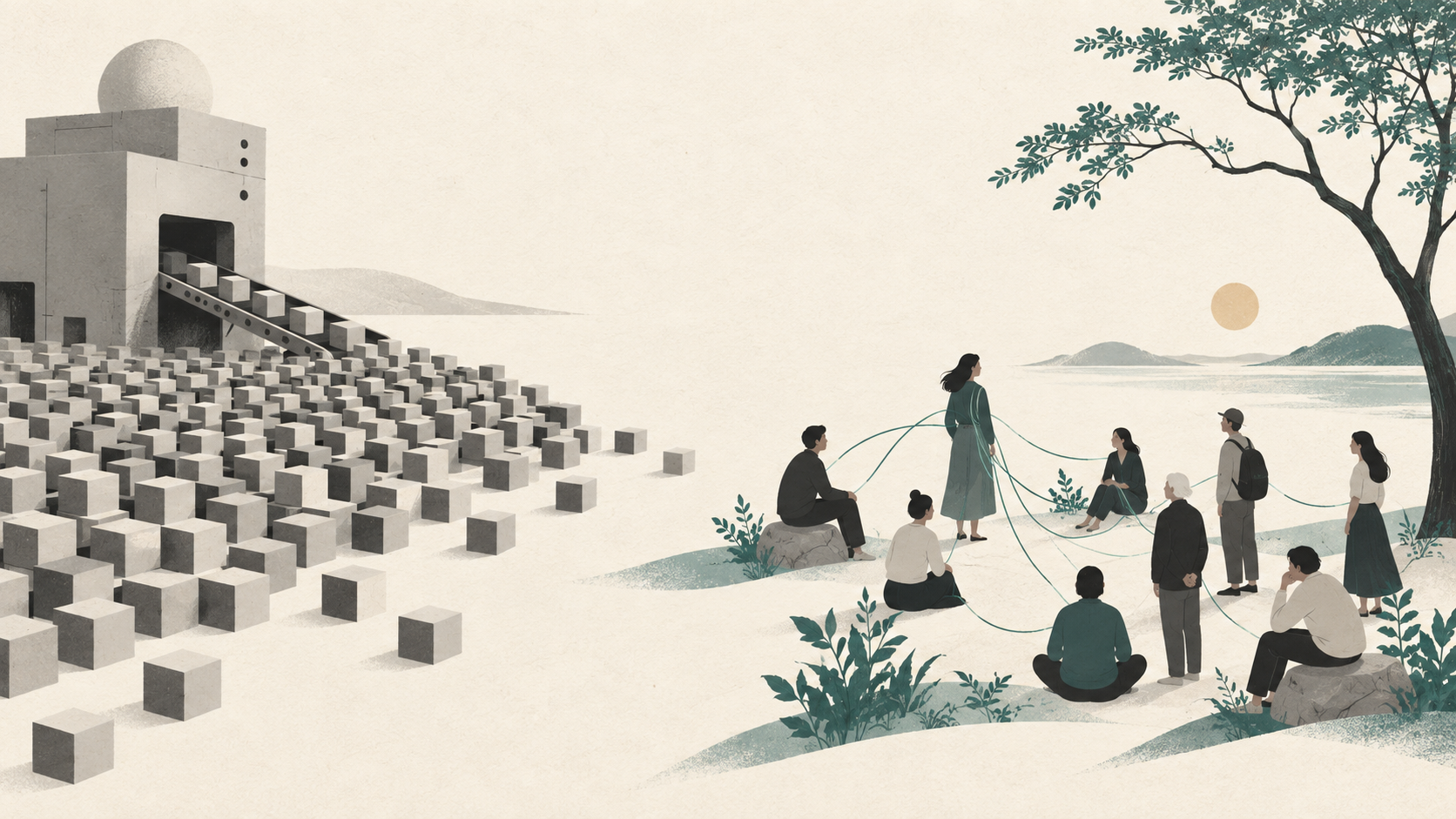
The age of the makers is ending.
The age of the carriers is coming.
Conclusion: So, Have We Already Lost?
Read this far and it gets depressing.
If the platform wins every game, what is a startup supposed to do? What about the rest of us? If any good idea is going to get copied anyway, why start at all?
There is a reason.
In the war Slack lost, and in the fight where Snapchat got robbed, the ones who survived had one thing in common. They owned something the platform couldn't copy.
The feature gets copied. Some things don't.
A world and a philosophy of your own. Design people fall for. A fan base that is small but deep. A speed no big company can match.
And the battlefield that is about to get hottest of all: who owns the idea. The war over patents and IP.
If you've been reading this series, these will sound familiar. Story, tradition, trust, symbols. Everything we've been talking about, translated into the language of companies, comes out like this.
How to survive in the age of the platform. No, how to shine right next to it. That's for the next essay, where I'll get properly into how startups survive.
For today, take just this.
Slack built the better product. Microsoft had the wider road.
In the AI era, ideas become common and features get copied. What you need to build is not features. It's a road.
If you want to win in the AI era, own the road. Distribution is king.
- JKIMMORGAN, ai storian